SoftPOS / Tap to Phone: How Merchants Are Turning Smartphones Into Card Readers
For decades, accepting card payments meant buying hardware. Merchants had to invest in terminals, manage cables, wait for approvals, and deal with technical failures mid-checkout. That model is changing fast. SoftPOS ecosystem and Tap to Phone technology are quietly dismantling that requirement — and the shift has real consequences for how merchants of every size think about payments.
What Is SoftPOS and How Does Tap-to-Phone Work?
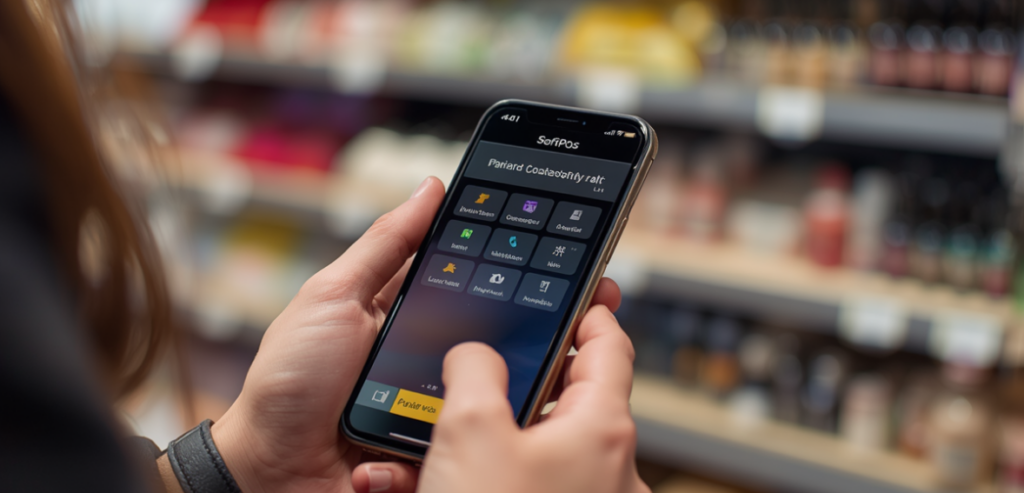
SoftPOS (Software Point of Sale) is a technology that converts a standard NFC-enabled smartphone or tablet into a fully functional payment terminal — no card reader attachment required. The term Tap to Phone is often used interchangeably, and it describes the same core experience: a customer taps their contactless card, smartphone, or wearable directly on the merchant’s device to complete a payment.
The wonder is in the software layer. When a validated payment app is activated on a merchant’s Android device, the phone’s integrated NFC chip is read. The chip collects the customer’s contactless payment card data. The entire process takes only seconds and uses nothing more than the hardware the merchant already has. The transaction is encrypted, processed, and settled through the payment network.
This is a significant departure from traditional payment infrastructure. Previously, even “wireless” card terminals were purpose-built devices with dedicated secure elements. SoftPOS moves that security logic into software, certified under the PCI SPoC (Software-based PIN entry on COTS) and PCI CPoC (Contactless Payments on COTS) standards. These certifications ensure that even a consumer-grade smartphone can handle sensitive payment data without compromising cardholder security.
Why Merchants Are Adopting SoftPOS at Scale
The merchant appeal is straightforward: lower cost, faster deployment, and greater flexibility. Traditional payment terminals can cost anywhere from $150 to $800 per device, not counting installation, maintenance contracts, or replacement cycles. A SoftPOS solution eliminates almost all hardware investment. A merchant downloads an app, completes onboarding, and starts accepting contactless payments — sometimes within the same day.
For independent or smaller traders and merchants, SoftPOS means no longer having to rent equipment or sign lengthy software agreements. Traders, freelancers, pop-up shops, and food trucks can now accept Visa, Mastercard, and contactless payments via their smartphones.
For larger retail and enterprise merchants, SoftPOS solves a line-busting payment infrastructure. Other payment points can be opened as checkout beacons. A point can be within the trading terminal. An associate is free to move throughout the sales floor and leave his checkout position.
The global momentum is significant. According to Juniper Research, the number of SoftPOS devices in use is expected to exceed 34 million globally by 2026, with adoption heaviest in North America, Europe, and emerging markets where smartphone penetration outpaces traditional banking infrastructure.
Key Players Driving the SoftPOS Ecosystem
Visa
Visa’s Tap to Phone initiative has spearheaded global SoftPOS standardization. They partner with payment facilitators, acquirers, and software developers to certify solutions on its acceptance network. Prioritizing accessibility, their program aims to serve underserved markets and micro-merchants, where traditional acceptance solutions remain financially unfeasible.
Mastercard
Mastercard self-controls its own Tap on Phone program and has certified solutions in several markets. In Southeast Asia, Latin America, and Sub-Saharan Africa, where mobile devices are highly concentrated and card acceptance terminals are scarce, SoftPOS acceptance takes priority. The certification program ensures interoperability across payment systems. In that regard, their certification program ensures interoperability among all the electronically managed payment systems.
Stripe
As part of the expansion of its merchant toolset, Stripe offers Tap to Pay for iPhone and Android. For software companies and marketplaces built on the Stripe tech stack, this means integrating SoftPOS functionality without requiring merchants to purchase additional hardware. The Stripe design is thoughtful, especially given its straightforward developer API and the ability to integrate with existing point-of-sale systems.
Square
Square has a long history of democratizing payments through hardware dongles. Their entry into SoftPOS with Square Tap to Pay also exemplifies the industry’s move away from physical card readers. What’s even better for Square clientele merchants is that there is no need to buy or set up a new device to make the transition. It remains the same dashboard and the same reports.
SoftPOS Security: Addressing the Most Common Concern
The most frequent objection to SoftPOS among merchants and IT teams is security. If a consumer smartphone is handling payment card data, how is that data protected? It is a fair question, and the answer lies in the certification standards that govern every legitimate SoftPOS deployment.
The PCI SSC (PCI Security Standards Council) has established specialized standards for software-based payment acceptance on commercial-off-the-shelf (COTS) devices. Precise measures for these standards dictate that cardholder data is not only strongly protected until after appropriate encryption leaves the NFC chip, but also that the application undergoes a comprehensive security assessment and maintains a tamper-proof runtime environment. Any device that is rooted or jailbroken is systematically monitored and, as warranted, blocked.
SoftPOS solutions from certified providers aren’t materially less secure than traditional hardware terminals. While there are some differences in the threat model, the main controls are designed to work with them. Merchants using these SoftPOS solutions from certified providers, while remaining on the supported operating system/version app, may follow a framework that adheres to the global card network requirements.
SoftPOS and the Broader Shift Toward Software-Defined Commerce

SoftPOS is part of a larger transition in how payment infrastructure is being built. Traditional point-of-sale systems were defined by hardware — the terminal dictated what was possible. Modern commerce is increasingly software-defined, meaning the software layer determines capabilities, and hardware becomes interchangeable.
There are several consequences of this shift related to merchants. Software updates can change payment methods, currencies, loyalty integrations, and reporting capabilities without requiring device changes. A smartphone with SoftPOS can be updated to accept new payment methods at any time. Hardware terminals with locked software do not offer this kind of interoperability.
It also means that independent software vendors (ISVs) can embed payment acceptance directly into their applications. A field service management app, a healthcare scheduling platform, or a retail inventory tool can include native payment acceptance as a built-in feature —not a bolt-on. For SoftPOS Tap-to-Phone merchants building software-first businesses, this represents a fundamental shift in how payment capabilities are distributed.
Real-World Use Cases for SoftPOS Tap to Phone Merchants
SoftPOS can be applied to many sectors and business models. For retail, SoftPOS won’t require fixed terminal infrastructure for curbside and in-aisle checkout. In the hospitality sector, payments can be processed from the server’s tablet right by the table. In the healthcare sector, SoftPOS enables practitioners to collect out-of-pocket and co-pay costs at the point of care and remotely from the payment station.
The businesses most likely to benefit from this are the plumbers, electricians, delivery operators, and repair techs. These merchants are constantly on the move, working in unpredictable situations. They would need a reliable, mobile payment method that doesn’t require specialized hardware. They would benefit the most from SoftPOS.
SoftPOS is also practical for nonprofit and event-oriented organizations. Volunteers and staff working in fundraisers, charity events, and community markets can collect payments for contactless donations and tickets without having to work around hardware issues. This eliminates almost all logistical barriers to payment collection.
What Merchants Should Evaluate Before Adopting SoftPOS
Not every SoftPOS solution is created equal, and merchants should evaluate providers carefully before committing. The critical factors are PCI certification status, supported card networks, transaction fee structures, operating system compatibility, and integration with existing business software.
Merchants need to ensure any SoftPOS providers have PCI SPoC or CPoC actual certification — not just a self-assessment by the provider. They should also substantiate the credentials of the accepted contactless payment types. Certificates of compliance for different networks are available from Visa, Mastercard, American Express, Apple, Google, and other digital wallet providers. Fee structures among providers for small merchants also vary widely and are even more complex for smaller merchants with no guaranteed monthly volume.
Android version requirements aren’t as simple as they seem. A lot of SoftPOS solutions put requirements on the minimum Android version and some NFC hardware capabilities. Older devices may not pass. It’ll save a lot of the onboarding friction if you can verify hardware compatibility beforehand.
Conclusion
SoftPOS and Tap to Phone technology represent one of the most practical shifts in payment infrastructure in recent years. For SoftPOS Tap to Phone merchants — from solo operators to enterprise retailers — the ability to accept contactless payments on an existing smartphone removes cost, complexity, and hardware dependency from the checkout equation. The technology is mature, security standards are rigorous, and adoption is accelerating across all market segments. What was once a specialized feature for tech-forward businesses is becoming a standard expectation in modern commerce. Merchants who adopt SoftPOS early position themselves with infrastructure that is flexible, scalable, and aligned with where the payments industry is heading.
Frequently Asked Questions
Is SoftPOS safe for accepting card payments?
Yes, when deployed through a PCI-certified provider. SoftPOS solutions that operate under PCI SPoC and CPoC standards encrypt cardholder data at the point of capture, monitor for device tampering, and automatically block unsupported or compromised devices. The security controls are comparable to those governing traditional card terminals.
What devices are compatible with SoftPOS Tap to Phone?
Most SoftPOS solutions require an NFC-enabled Android smartphone running a supported OS version. iPhone compatibility is available through specific providers such as Stripe, via Apple’s Tap to Pay framework. Older devices without NFC hardware or those running outdated operating systems may not be supported.
Do SoftPOS merchants need a separate merchant account?
This depends on the provider. Platforms like Stripe and Square include merchant account functionality within their SoftPOS offering. Other SoftPOS providers integrate with an existing acquiring relationship. Either way, a payment processing agreement is required — but hardware is not.
Can SoftPOS handle PIN entry for higher-value transactions?
Yes. Solutions certified under PCI SPoC support software-based PIN entry on the consumer’s device or on a secondary screen. This allows SoftPOS Tap to Phone merchants to process higher-value transactions that fall above contactless-only limits, meeting the full range of card network transaction requirements.